How to Build a Digital Retention Strategy That Actually Works (Step-by-Step Guide)

The cost of getting a new customer can be five to twenty-five times higher than keeping an existing one. Many digital retention strategies fail because businesses implement them without proving it right against their actual business metrics.
The numbers tell a troubling story. A case study revealed that more than 1 in 4 customers left, while fiber users dropped out at an alarming rate of 42%. Customer retention has become a vital part of digital marketing in today’s competitive digital world.
Customer retention strategies work best when you understand which approaches keep customers around and why they succeed. Research shows loyal customers generate much more revenue throughout their relationship with a business compared to new ones. Live analytics also show that user activation predicts long-term retention better than anything else. This happens when customers first experience your product’s core value.
This piece offers a detailed guide to build a digital retention strategy that delivers real results. You’ll learn a proven step-by-step method that skips theory and focuses on practical steps to propel business growth.
What is Retention in Digital Marketing?
Customer retention shows how well companies keep their existing customers over time. It includes all strategies that keep customers happy and ready to buy again. Rather than chasing new leads, retention focuses on nurturing the customers you already have.
Definition and how it is different from acquisition
Your existing customer base holds maximum value when you build loyalty and encourage repeat business. This makes retention marketing quite different from acquisition marketing, which targets people who haven’t bought from you before.
These two approaches serve different purposes. Acquisition grows your customer base, while retention builds deeper relationships with current customers. Acquisition campaigns target broad audiences through advertising, but retention targets specific groups who know your brand’s value.
Retention marketing uses unique tactics compared to acquisition:
Customized onboarding
Proactive customer support
Proactive customer support
Regular email and multi-channel communication
Educational content for existing customers
This approach creates steady growth by building a loyal customer base that generates reliable revenue.
Why retention is more cost-effective than acquisition
The numbers make a strong case for focusing on retention. Studies show that getting a new customer costs five to seven times more than keeping an existing one. Some industries like insurance see even bigger differences seven to nine times more expensive.
Companies spend much more to attract new customers through:
Marketing campaigns on multiple channels
Sales team’s lead conversion efforts
Competitive pricing and special discounts
Onboarding and initial support
Email marketing, special offers, and loyalty programs target people who already know your brand, making them more affordable.
Retention strategies don’t just save money, they boost profits. Research proves that a 5% increase in customer retention can increase profits by 25-95%. Long-term customers spend 67% more than new ones.
The sales numbers tell the same story. You have a 60-70% chance of selling to current customers, but only 5-20% to new prospects. About 80% of your future revenue will come from just 20% of existing customers.
The math makes sense. Repeat customers trust your brand and know your products well. You don’t need to rebuild trust or awareness every time they buy.
Both acquisition and retention matter in digital marketing strategy. However, the data shows that building strong relationships with existing customers gives better returns and should be the life-blood of your digital retention strategy.
How to Measure Retention Success
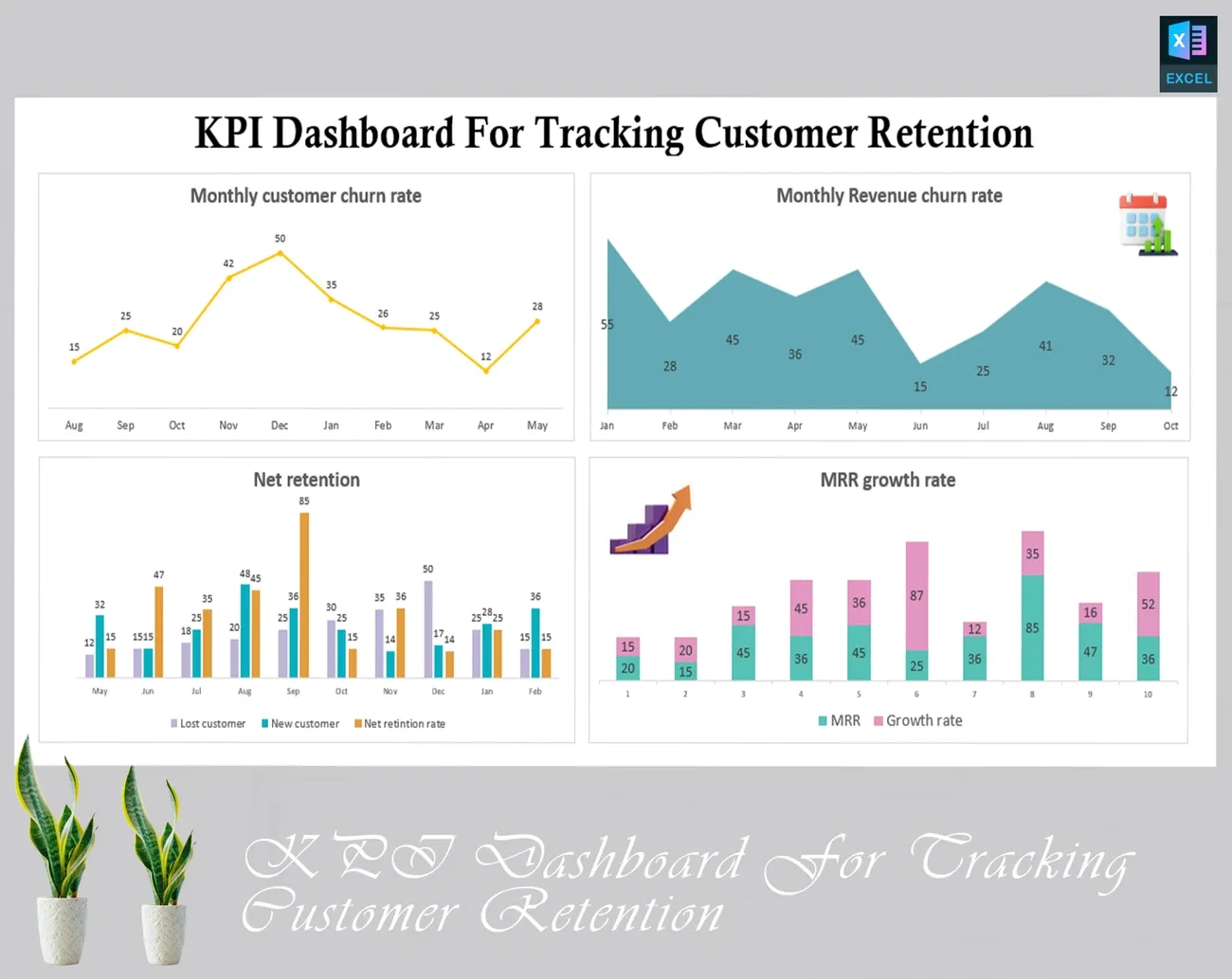
Image Source: Diirzal
Your digital retention strategy needs specific metrics to track customer loyalty and how people interact with your business. Smart companies don’t just put retention tactics in place – they keep a close eye on how well these tactics work through evidence-based analytics. Here are four key metrics that paint a complete picture of your retention success.
Customer retention rate (CRR)
CRR shows what percentage of your existing customers stick with your business during a specific time frame. This basic metric shows how well your digital marketing retention strategy works.
Here’s how to calculate your CRR: ((E-N)/S) × 100 = Customer Retention Rate
Where:
E = Number of customers at the end of period
N = New customers acquired during period
S = Number of customers at the start of period
To cite an instance, see what happens if you start a month with 107 customers, lose 8, but gain 21 new ones: ((120-21)/107) × 100 = 92.5% retention rate
A high retention rate shows your customers are happy and loyal. This rate works as the opposite of your churn rate. SaaS companies usually see a median customer retention of about 87%, which gives you a good measure of your own success.
Churn rate and what it reveals
The churn rate shows what percentage of customers leave your business during a specific time. This number helps you learn about possible issues in your customer’s experience.
The math is simple: ((S-E)/S) × 100 = Customer Churn Rate
Let’s use our earlier example with 150 customers at the start of a quarter and 85 at the end: ((150-85)/150) × 100 = 43.3% churn rate
Churn analysis reveals patterns in how customers behave. High churn creates a “leaky bucket” effect – whatever new customers you bring in, you keep losing much of them. SaaS businesses typically see a median annual logo churn around 13%.
Revenue churn looks at lost revenue instead of lost customers and tells an even deeper story. If your monthly recurring revenue (MRR) starts at $20,000 in January and you lose $3,000 from churned or downgraded customers, your revenue churn would be 15%.
Customer lifetime value (CLV)
CLV shows how much profit you make from a customer throughout your entire relationship. This vital metric helps you decide how much to spend on getting new customers and where to focus your retention efforts.
The CLV formula works like this: Customer Lifetime Value = Customer Value × Average Customer LifespanWhere Customer Value = Average Purchase Amount × Average Purchase Frequency
A grocery chain might have customers who spend $50 per visit, shop 26 times a year, and stay loyal for seven years. Their CLV would be $9,100.
Small improvements in retention can make a big difference in CLV. Research shows that a 5% increase in customer retention can boost profits by 25-95%. This makes CLV a key part of any lasting digital retention strategy.
Net promoter score (NPS)
NPS measures how loyal and satisfied your customers are with one simple question: “How likely are you to recommend our company/product/service to a friend or colleague?”
Take the percentage of promoters (scores 9-10) and subtract the percentage of detractors (scores 0-6): NPS = % Promoters – % Detractors
If 60% of people choose 9-10 and 30% pick 6 or below, your NPS score would be 30%.
The NPS scale runs from -100 to +100. Scores above 30 mean your company does well, while scores above 70 show exceptional customer loyalty. A high NPS means customers love your product enough to tell others about it – this often predicts future retention and growth.
These four metrics work together to give you different insights. Put them all in one dashboard and you’ll spot retention issues before they hurt your revenue. This lets you make smart changes based on real data, not guesses, and your digital retention strategy will show better results.

Step-by-Step Digital Retention Strategy
A digital retention strategy that works needs to address each stage of the customer’s lifecycle. You need to know where customers are in their experience, why they leave, and what keeps them interested over time. Here are five important steps to develop a retention strategy that gets real results.
Step 1: Map the customer journey
Start with a visual map showing how customers interact with your brand. Your map should cover all touchpoints from when customers first discover you to their long-term relationship. The first task is to define customer personas that show different segments of your customer base, including their demographics, behaviors, and goals. Next, list every point where customers connect with your brand – online and offline. A detailed journey map helps you arrange your business strategies with what customers expect and shows where you need to improve.
Step 2: Identify key drop-off points
Once you have your map, look at where users leave your product or service. Drop-off analysis helps you find friction points that affect your conversion funnel. Use analytics tools to measure drop-off rates at different stages of the customer journey. Session recordings and heatmaps show you exactly where user interest decreases. Pay special attention to unexpected exit points – pages where users shouldn’t be leaving, like checkout pages or half-finished forms.
Step 3: Set retention goals and KPIs
Create clear, measurable targets for your retention work. Your goals might include:
Making customer retention rate better by a specific percentage
Lowering churn in specific customer segments
Growing customer lifetime value
Making net promoter score better
Set measurements based on industry standards – like the 95% monthly retention rate (showing 5% churn) that most people call good for SaaS companies.
Step 4: Choose the right tools and platforms
Pick retention software that fits your business needs. Good tools should give you features like user behavior analytics, campaign automation, and advanced segmentation. Look for solutions that work with multiple channels and blend with your current systems. The tool should be easy to use for both your team and customers to speed up adoption.
Step 5: Build a cross-functional retention team
Marketing alone can’t handle retention. You need a team from different departments to create a complete customer experience. Bring in people from customer success, product development, data insights, and support teams. Of course, clear roles and responsibilities help prevent overlap and encourage ownership among team members. Strong partnerships between departments will help you get the information and resources you need to run retention strategies well.
Proven User Retention Strategies That Work
Customer retention success comes from specific strategies that target different parts of the customer experience. Here are five approaches that consistently show measurable results.
Personalized onboarding experiences
A strong onboarding process builds the foundations for keeping customers long-term by showing your product’s value quickly. Research shows that 23% of user churn comes from poor onboarding. Your time-to-value speeds up when you create custom onboarding paths based on user data. This helps make strong first impressions. Custom welcome emails, interactive product tours, and milestone-based guidance help users see immediate benefits.
Loyalty and rewards programs
A well-laid-out loyalty program gets customers to buy more often and spend more money. Points systems, tiered rewards, and value-driven models create emotional bonds that bring repeat business. Studies show that optimized loyalty programs boost customer retention rates and increase how often people buy. Starbucks proves this through their rewards program, which 71% of users involve themselves with weekly.
Proactive customer support
The support experience becomes better when you anticipate customer needs beforehand. Proactive support finds potential problems early instead of waiting for issues to surface. This builds trust, cuts down frustration, and creates positive experiences. Companies using proactive service spend 15-20% less on support costs because they fix issues before they grow bigger.
Community building and engagement
Online communities encourage connections between customers and create belonging, which substantially improves retention. Users share knowledge, solve problems together, and build emotional connections with your brand in these spaces. Communities offer available support, peer-to-peer networking, and immediate communication that make customers feel invested in your success.
Content and education-based retention
Educational resources give customers the ability to get the most value from your product. Knowledge bases, tutorials, and webinars help customers become more successful. HubSpot found that customers who completed specific certification programs had substantially lower churn rates, even when they showed no risk signals at first.
Optimizing and Scaling Your Strategy
Your digital retention strategy needs constant fine-tuning to achieve long-term success. The best approach uses data, feedback, and automation to improve retention efforts gradually.
Using A/B testing to refine retention tactics
A/B testing helps you find which product versions keep users engaged. You can spot user friction points and make improvements through experimental comparisons. Research shows companies achieve better customer satisfaction and save money and time when they combine lifecycle automation with A/B testing. The best A/B test designs target specific user problems through different versions of onboarding flows, feature designs, or messaging strategies.
Making customer feedback work
A structured feedback system helps businesses adapt to their customers’ changing needs. NPS surveys, sentiment analysis, and post-purchase questionnaires should collect feedback regularly. The team can analyze responses to find patterns and get applicable information. The final phase makes improvements based on feedback and tells customers about these changes. This process builds trust because customers see their suggestions turn into real improvements.
Automating retention workflows
Smart automation turns manual processes into efficient systems. This reduces customer loss by up to 25% and frees teams from routine tasks. Good automation has:
Data-driven offers for customers
Custom email sequences for onboarding and re-engagement
Early help for accounts at risk
Smart renewal management
Companies that use automated renewal workflows see 15% less customer loss and better teamwork between departments.
Tracking long-term retention trends
Long-term retention data analysis reveals seasonal patterns and shows how well your improvements work. Good trend tracking watches user groups, maps retention curves, and spots when curves level off, this shows users finding lasting value. Your retention metrics should work with other measures like customer lifetime value and engagement stats to learn about business performance. This complete approach helps you make evidence-based decisions that boost both retention and growth.

Conclusion
A solid digital retention strategy is one of the best investments you can make for green business growth. This piece shows how retention efforts work better than acquisition when it comes to cost and overall effect. Note that increasing customer retention by just 5% can boost profits between 25-95% – a compelling reason to keep your existing customers happy.
Numbers tell the story clearly. Your existing customers spend 67% more than new ones. The chance of selling to current customers is 60-70% compared to just 5-20% for new prospects. On top of that, tracking key metrics like Customer Retention Rate, Churn Rate, Customer Lifetime Value, and Net Promoter Score gives you practical insights to improve your strategy.
Our five-step approach creates strong foundations for retention success. You need to map the customer experience first. Then spot where users leave. Next, set clear retention goals. Choose the right tools to implement. Last, build a cross-functional team to execute your strategy.
The best retention strategies mix customized onboarding, loyalty programs, proactive support, community building, and educational content. These tested approaches touch different parts of the customer experience. They create multiple ways to deliver value and deepen their commitment.
Of course, your retention strategy must evolve. A/B testing, customer feedback loops, and workflow automation help you optimize and scale over time. This method changes retention from a reactive concern into a proactive growth driver for your business.
These strategies will help you build stronger customer relationships, reduce churn, and accelerate green growth. Start small, measure consistently, and refine your approach based on ground data. Your business growth depends not just on who you attract but on who you keep.
Key Takeaways
Building a successful digital retention strategy requires a systematic, data-driven approach that prioritizes existing customers over constant acquisition efforts.
• Retention is 5-25x more cost-effective than acquisition – existing customers spend 67% more and have 60-70% purchase probability vs 5-20% for new prospects
• Track four essential metrics: Customer Retention Rate, Churn Rate, Customer Lifetime Value, and Net Promoter Score to measure strategy effectiveness
• Follow the 5-step framework: Map customer journey, identify drop-off points, set clear KPIs, choose right tools, and build cross-functional teams
• Implement proven tactics: Personalized onboarding, loyalty programs, proactive support, community building, and educational content for maximum impact
• Optimize continuously through A/B testing, customer feedback loops, and automation to refine retention workflows and reduce churn by up to 25%
The most compelling statistic: increasing customer retention by just 5% can boost profits by 25-95%, making retention optimization one of the highest-ROI investments for sustainable business growth.
FAQs
Q1. What are the key components of an effective digital retention strategy? An effective digital retention strategy includes personalized onboarding experiences, loyalty programs, proactive customer support, community building, and educational content. These components work together to enhance customer engagement, satisfaction, and long-term loyalty.
Q2. How can businesses measure the success of their retention efforts? Businesses can measure retention success by tracking key metrics such as Customer Retention Rate (CRR), Churn Rate, Customer Lifetime Value (CLV), and Net Promoter Score (NPS). These metrics provide insights into customer loyalty, satisfaction, and the overall effectiveness of retention strategies.
Q3. Why is customer retention more cost-effective than acquisition? Customer retention is more cost-effective because it’s 5-25 times cheaper to retain existing customers than to acquire new ones. Existing customers tend to spend more, have a higher purchase probability, and require less convincing to make additional purchases, leading to increased profitability.
Q4. What role does automation play in optimizing retention strategies? Automation plays a crucial role in optimizing retention strategies by streamlining processes, reducing manual tasks, and enabling proactive interventions. It can help businesses implement triggered offers, personalized email sequences, and automated renewal management, potentially reducing churn rates by up to 25%.
Q5. How can companies continuously improve their retention strategies? Companies can continuously improve their retention strategies by implementing A/B testing to refine tactics, leveraging customer feedback loops, automating retention workflows, and tracking long-term retention trends. This data-driven approach allows businesses to make informed decisions and adapt their strategies to evolving customer needs.