Why Most Inventory Forecasting Methods Fail (And What Actually Works)

Your business’s margins, reputation, and customer satisfaction levels suffer when inventory forecasting fails. Accurate inventory forecasting methods can determine whether your operations thrive or get pricey mistakes happen. A good forecast will give you the right stock levels to meet customer needs without excess inventory eating up your cash.
The accuracy of inventory forecasts faces challenges as supply chains and consumer patterns change faster. In this piece, we’ll explore why traditional demand forecasting techniques fall short and which inventory management forecasting methods deliver results. You’ll learn how combining quantitative and qualitative approaches can reshape the scene of your inventory control systems.
Your business needs accurate demand forecasting to succeed. Informed predictions help you avoid buying unnecessary inventory. A comprehensive forecast keeps your supply chain smooth, prevents stockouts, and helps your business spot upcoming trends. This piece shares proven strategies that help you dodge common mistakes while getting the most from your resilient inventory forecast models.
Why Most Inventory Forecasting Methods Fail
Traditional inventory forecasting methods don’t work well, even though businesses use them extensively. Research shows that inventory distortion costs a staggering $1.77 trillion worldwide. These methods keep failing because of basic problems that break down even the best-planned forecasting approaches.
Overreliance on Historical Sales Data
Companies often make a big mistake. They rely too much on past sales data to predict future demand. Forecasters mix up demand forecasts with demand plans. They add service-level requirements to forecasts even when told not to. This creates problems because past sales only show what was sold, not what customers wanted to buy.
Studies reveal that nearly 50% of companies struggle with forecasting accuracy because they don’t consider missed sales from stockouts and other inventory limits. Past patterns become useless when markets change or customer priorities shift faster.
Ignoring Real-Time Market Shifts
Markets keep changing, but most forecasting methods stay the same. Companies that only look at past trends miss vital real-time signals that affect buying decisions. Market changes can happen quickly. A single product placement by a social media influencer could empty your inventory within seconds. Economic conditions, competitor moves, and global events change how people buy things. Companies that don’t watch these external signals end up with forecasts that don’t match reality.
Failure to Account for Promotions and Seasonality
Promotions and seasonal changes create major forecasting challenges that many systems can’t handle. Research shows that sales promotions affect service levels differently. People tend to overforecast more during promotional periods when service levels are high. Companies also face these promotion-related challenges:
- Pre-orders: Customers placing orders before promotions begin
- Delayed purchases: Consumers waiting until promotions start
- Rebound effects: Demand spikes during promotions followed by drops afterward
Seasonal inventory planning matters just as much. Poor planning leads to empty shelves or too many markdowns. Yet 37% of retailers across the U.S., U.K., France, and Germany still use spreadsheets to manage promotions. This makes accurate seasonal adjustments impossible.
Lack of Cross-Functional Collaboration
Good inventory management needs departments to work together, something many forecasting methods ignore. Studies show that companies with well-connected supply chain operations are 20% more efficient than those working separately. Marketing, sales, inventory management, and supply chain teams create their own versions of truth when working alone. This creates problems when marketing campaigns drive demand that inventory systems didn’t expect. Companies with good team communication respond 30% faster to supply chain problems than those working in silos.
Inflexible Forecasting Periods
Companies often stick to rigid forecasting schedules that don’t match market changes. Forecasts become less accurate the further they look into the future because of market fluctuations, current events, and scientific risk. The problem gets worse when forecasting methods can’t adapt to new conditions. Industry experts say “forecasting too early means you’ll almost certainly miss the mark”. Monthly or quarterly forecast updates don’t work well enough in today’s ever-changing markets, especially when external conditions shift quickly. Companies can’t respond fast enough to new trends and unexpected demand changes.
Better forecasting needs advanced analytics, department cooperation, and flexible approaches that use both historical data and real-time market signals. Companies can create more accurate forecasts that truly reflect market realities by fixing these core issues.
Limitations of Traditional Forecasting Techniques
Advanced inventory forecasting techniques have fundamental limitations that prevent them from working properly. Let’s get into these significant problems that stop businesses from reaching the best inventory levels.
Trend Forecasting and Its Blind Spots
Trend forecasting usually fails because it treats forecasting as the end goal and ignores the additional calculations needed to turn predictions into restocking decisions. Even the best trend models don’t work well when major supply chain problems happen, and actual demand strays far from what was expected. The biggest problem is that trend forecasting depends on pattern matching instead of understanding why things happen. Time makes everything more complex – long-term forecasts are much less reliable than short-term ones. Yet many businesses make important inventory decisions based on these unreliable long-range projections.
Qualitative Forecasting Without Data Validation
Qualitative forecasting helps include expert knowledge but suffers from personal opinions. Without proper data checks, personal bias takes over. Analysts tend to ignore information that doesn’t fit their expectations. These subjective methods increase the risk of errors and don’t scale well for large operations. Unexpected events can make qualitative assessments useless. Businesses that rely only on this approach are especially vulnerable to sudden market changes.
Quantitative Forecasting and Data Gaps
Quantitative models come with their own set of problems. They just need clean, accurate data to work. Many systems lack enough data for a resilient analysis, which leads to forecasts missing important details. Missing information can substantially throw off time series analysis, weakening the foundation of quantitative predictions. The sort of thing I love to point out is that CRM systems capture only one percent of actual deal activity. This creates a huge blind spot in evidence-based forecasting approaches. Analysts must make decisions with incomplete information instead of having the full picture.
Seasonality Forecasting Without Index Calibration
Seasonality forecasting falls short mainly because of poor calibration. Without systematic error estimates and skill measurements from re-forecast data, seasonal adjustments lack accuracy. Companies should avoid adding seasonality to forecasts where it doesn’t exist. Statistics show that missing real seasonality can reduce forecast accuracy by 20% to 40%. Incorrect use of seasonal indices causes just as many problems. There’s another reason – calculating seasonality indexes for individual items instead of looking at broader patterns creates models that misread seasonal demand fluctuations.
What Actually Works in Inventory Forecasting
Businesses succeed with inventory forecasting when they blend different approaches to handle today’s complex supply chains. Smart companies know that forecasting works best when it combines multiple methods rather than using a single approach.
Combining Quantitative and Qualitative Methods
When quantitative and qualitative forecasting work together, they create better results by covering each other’s blind spots. Companies get a clearer view by using both techniques in their forecasting process. To cite an instance, you can start with statistical moving averages from past sales data and improve this base with expert panels or market research that spot new trends. This balanced method helps companies spot opportunities while managing risks in a changing business environment. Organizations build more accurate forecasts by bringing together evidence-based patterns and real-life insights.
Using Real-Time Sales and Inventory Data
Up-to-the-minute inventory data lets businesses see stock levels and make smart reordering decisions to avoid running out or having too much stock. Stock management becomes an ongoing process instead of periodic checks. Companies that track inventory in real-time cut stockouts by 37% and reduce excess inventory by 29%. Sales patterns show up instantly, helping businesses spot demand changes and adjust stock levels. Toyota shows how this works – they use live supplier monitoring and inventory analysis to spot potential problems and keep their just-in-time system running smoothly.
Scenario Planning for Demand Spikes
Scenario planning helps companies handle unpredictable market changes and demand swings. This method looks at multiple “what if” situations instead of making single predictions about the future. Teams can compare different plans and pick the best course of action. The process starts by finding variables that could change your demand plan, such as new investments or strategic decisions. Next, you test how these changes affect your key metrics like revenue, planning accuracy, and parts shortages. This forward-thinking approach helps companies avoid situations where problems can destroy up to 68% of corporate value.
Incorporating External Market Signals
Smart organizations know they can’t rely only on their own data in today’s connected business world. Looking at external data shows you more than just your operations through:
- Economic indicators that show coming changes in customer spending
- Industry trends that reveal new products and changing priorities
- Social media reactions that give instant consumer feedback
- Environmental factors and weather that affect seasonal demand
- Holidays and events that create predictable demand spikes
These external signals make forecasts more accurate and responsive. Companies waste less, avoid stockouts, and run their supply chains better. Organizations that make use of information from outside sources get better at predicting demand, face fewer risks, make smarter decisions, and run more efficiently.
Modern Inventory Forecast Models That Deliver Results
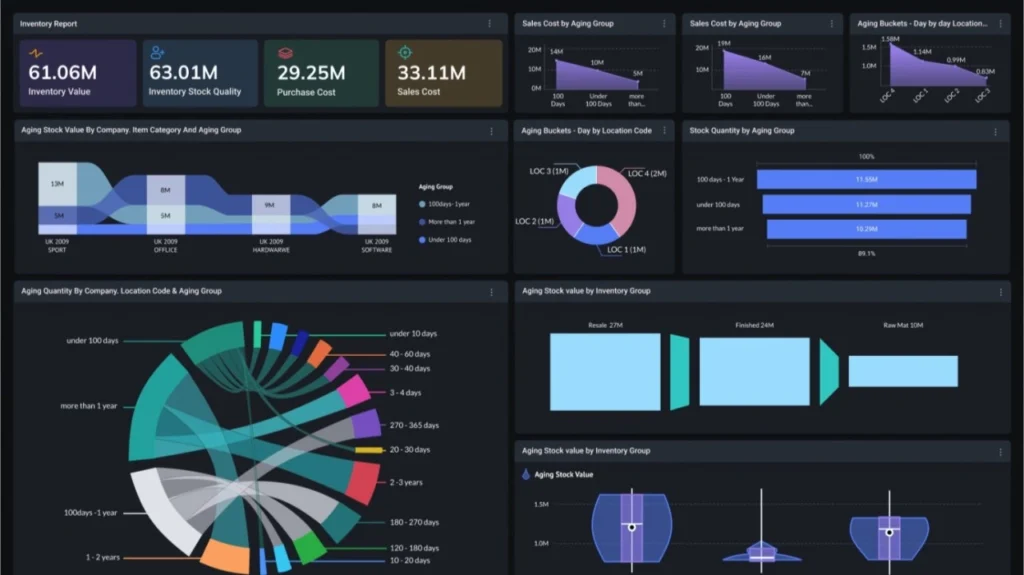
Image Source: LinkedIn
Supply chains have become complex, and businesses just need sophisticated mathematical models to guide their inventory forecasting. Better results come from advanced approaches that use multiple data sources and complex algorithms instead of traditional methods.
Time-Series Forecasting with ARIMA Models
ARIMA (Autoregressive Integrated Moving Average) models are powerful tools that excel at time-series forecasting. These models blend autoregressive modeling with moving average modeling and tackle non-stationarity through differencing. Three main components make up ARIMA: Autoregressive (AR) builds trends from past values, Integrated (I) deals with differencing to achieve stationarity, and Moving Average (MA) looks at relationships between observations and residual errors. The models pick up complex patterns in historical data and work well in finance, economics, and environmental sciences.
Causal Models Using Regression Analysis
Causal modeling makes use of independent explanatory variables to predict demand and learns about patterns that time-series analysis misses. Unlike models based only on history, causal forecasting looks at factors like price changes, promotional activities, and seasonality that affect demand. These models rely on regression analysis to figure out relationships between a dependent variable (e.g., product demand) and various independent variables (e.g., price, weather, marketing spend). Products with demand clearly tied to measurable external factors benefit most from this approach.
Machine Learning-Based Demand Forecasting Techniques
Machine learning has revolutionized inventory forecasting by finding patterns in large datasets automatically. The most useful ML approaches include:
- Neural networks and deep learning to capture complex relationships in large datasets
- Random Forests and Decision Trees to handle multidimensional data
- Long Short-Term Memory (LSTM) networks for sequential data with seasonal patterns
These techniques are great at including external factors and can spot connections between local weather variables and sales that humans might miss.
Inventory Forecasting Software with Predictive Analytics
Today’s inventory forecasting software uses predictive analytics to set the right stock levels. These systems look at historical sales data, market trends, and up-to-the-minute information to predict demand accurately. The tools can automatically replenish stock and adjust to market changes as new data comes in. They give businesses instant reports about inventory levels and sales performance, which helps them make smart decisions about their supply chain operations.
Best Practices for Forecasting and Inventory Management
Organizations need practical execution strategies to implement inventory forecasting methods that bridge theory and reality. A solid foundation for inventory excellence emerges when teams master these best practices.
Collaborating Across Sales, Marketing, and Operations
The entire company must participate in inventory forecasting. Research shows businesses with integrated supply chain operations work 20% more efficiently than those with fragmented structures. Cross-functional collaboration helps teams learn from warehouse staff, marketers, and customer service representatives who interact directly with demand. Teams can spot upcoming events early and add them to forecasts through this collaborative approach. Companies that communicate well across functions respond 30% faster to supply chain disruptions than siloed operations.
Setting Dynamic Reorder Points and Safety Stock
The reorder point formula—(average daily unit sales × lead time) + safety stock—is a vital inventory management tool. Manufacturer lead times, warehouse receiving times, and possible demand spikes should factor into safety stock calculations. Teams should focus on setting reorder points for their most popular SKUs with stable demand since analyzing every product takes too much time. Reorder points fluctuate with demand and supplier conditions. New data and market changes should guide regular updates.
Monitoring Forecast Accuracy with MAPE and MAD
Measuring forecast accuracy helps teams improve continuously. Mean Absolute Percentage Error (MAPE) shows the percentage difference between actual values and statistical forecasts—higher MAPE means larger forecast errors. Mean Absolute Deviation (MAD) measures the absolute difference between forecasts and actuals in unit values. MAD gives clear measurements of average error magnitude but doesn’t reveal over or under-forecasting. Teams should use these metrics with forecast bias calculations to determine if demand typically exceeds or falls short of predictions.
Using Inventory Turnover to Refine Forecasts
Inventory turnover data substantially affects forecasting accuracy. This ratio shows how quickly a business sells and replaces stock by dividing units sold by average on-hand inventory. Popular products usually show high turnover while items staying longer in storage show low turnover. Regular turnover analysis helps identify slow-moving products, adjust ordering habits, minimize overstock, and reduce carrying costs. Companies that use turnover metrics effectively for inventory planning are 2.3 times more likely to achieve above-average supply chain visibility and efficiency.
Automating Forecast Updates with Integrated Tools
Automation revolutionizes inventory forecasting from periodic assessment to continuous optimization. Advanced systems link sales, supply chain, and inventory data through up-to-the-minute feeds instead of manual imports. Sophisticated forecasting platforms offer shared workspaces, advanced analytics, and elastic capacity to support multiple stakeholders, unlike simple spreadsheets. These tools update forecasts automatically based on new data, market changes, and customer feedback. Machine learning capabilities reduce errors in supply chain networks and decrease stockouts by learning from incoming data and making automatic adjustments.
Conclusion
Accurate inventory forecasting is the life-blood of business success in the ever-changing market environment. This piece explores why traditional forecasting methods don’t work well anymore and shows better alternatives that get results.
Without doubt, conventional approaches have their drawbacks. The heavy reliance on historical data and lack of team collaboration has cost businesses trillions worldwide through inventory distortion. On top of that, strict forecasting periods and missing real-time market signals make these challenges worse. Companies can’t adapt faster when market conditions change.
A business needs multiple approaches to forecast inventory well. Mixing number-crunching with qualitative insights creates a balanced viewpoint that works better than either method alone. Immediate data integration lets businesses respond quickly to market changes instead of using old information. Smart scenario planning helps organizations prepare for different outcomes and prevents things from getting pricey when demand patterns shift unexpectedly.
Modern forecasting models solve many traditional problems effectively. ARIMA models track complex time-series patterns while causal modeling spots key demand drivers. Machine learning algorithms find hidden patterns in huge datasets that humans might miss. These advanced techniques merge with integrated software platforms to turn raw data into applicable inventory insights.
Good practices ended up determining forecasting success. Team collaboration brings varied viewpoints to predictions. Dynamic reorder points and safety stock calculations keep inventory levels just right. Regular accuracy checks using MAPE and MAD metrics help improve continuously. Inventory turnover analysis spots problematic SKUs that need attention.
Businesses that make use of data-driven forecasting while keeping human oversight will lead future inventory management. Though perfect prediction isn’t possible, mixing advanced analytics with practical business knowledge creates strong inventory systems that handle market swings well. Companies using these forecasting strategies will meet customer demands and cut costs better – giving them an edge that boosts profits and keeps customers happy.
Key Takeaways
Traditional inventory forecasting fails because it relies too heavily on historical data while ignoring real-time market signals, costing businesses $1.77 trillion globally through inventory distortion.
• Combine quantitative data analysis with qualitative insights to create balanced forecasts that capture both statistical patterns and market intelligence
• Implement real-time data integration and scenario planning to respond quickly to market shifts and prepare for demand spikes
• Use modern forecasting models like ARIMA, machine learning algorithms, and predictive analytics software for superior accuracy
• Foster cross-functional collaboration between sales, marketing, and operations teams to improve forecast accuracy by 20%
• Monitor forecast performance using MAPE and MAD metrics while setting dynamic reorder points based on current market conditions
Successful inventory forecasting isn’t about perfect prediction, it’s about creating adaptive systems that combine advanced analytics with practical business knowledge to maintain optimal stock levels while minimizing costs and maximizing customer satisfaction.
FAQs
Q1. Why do traditional inventory forecasting methods often fail? Traditional methods often fail due to overreliance on historical data, ignoring real-time market shifts, and failing to account for promotions and seasonality. These approaches can lead to significant inventory distortion, costing businesses trillions globally.
Q2. What are some effective alternatives to traditional inventory forecasting? Effective alternatives include combining quantitative and qualitative methods, using real-time sales and inventory data, implementing scenario planning for demand spikes, and incorporating external market signals. These approaches provide a more comprehensive and adaptive forecasting strategy.
Q3. How can businesses improve their inventory forecasting accuracy? Businesses can improve accuracy by fostering cross-functional collaboration, setting dynamic reorder points, monitoring forecast accuracy with metrics like MAPE and MAD, analyzing inventory turnover, and automating forecast updates with integrated tools. These practices help create a more responsive and precise forecasting system.
Q4. What role does machine learning play in modern inventory forecasting? Machine learning transforms inventory forecasting by automatically identifying patterns in large datasets. It can capture complex relationships, handle multidimensional data, and detect subtle patterns that human analysis might miss. This leads to more accurate demand predictions and optimized stock levels.
Q5. How can businesses balance data-driven forecasting with human oversight? While embracing data-driven forecasting is crucial, maintaining human oversight is equally important. Businesses should combine advanced analytics with practical business knowledge to create resilient inventory systems. This balanced approach allows for better interpretation of data, consideration of qualitative factors, and strategic decision-making in response to market volatility.